Federal Communications Commission (FCC or Commission) Chairman Brendan Carr released a tentative agenda focused on consumer protection and America’s leadership in space for the FCC’s March Open Meeting scheduled for Thursday, March 26th at 10:30 a.m. ET. Details on the seven items expected to be considered at the Open Meeting are summarized and discussed below:
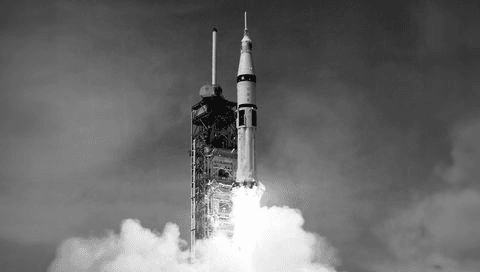
- Spectrum Abundance for Weird Space Stuff – Notice of Proposed Rulemaking, SB Docket No. 26-54. In this draft Notice of Proposed Rulemaking (NPRM), the Commission seeks comment on rules that would facilitate spectrum abundance for “emergent space activities.” Emergent space activities are those spacecraft or commercial operations in space that use radio spectrum for control of, or communications with, a spacecraft, but which are not communications satellites. The NPRM observes that some emergent space operations, such as telemetry, tracking and command for emergent spacecraft, are already facing an acute shortage of usable and readily accessible spectrum. The NPRM will consider proposals that would clarify and expand the FCC’s traditional regulatory classifications to ensure more predictable access to spectrum for emergent space operations. The NPRM also would propose to authorize “frequency piggybacking,” which would allow two spacecraft that are connected or in close proximity to each other to communicate using a frequency band that is already authorized for one of the spacecraft. Additionally, the Commission would propose to add a secondary allocation for the Space Operation Service (SOS) in spectrum bands that could support emergent space activities, and particularly in bands allocated for non-federal use that may be lightly used in certain geographic areas. The NPRM also would propose to allow existing licensees to lease their spectrum to earth station licensees to provide SOS in connection with emergent spacecraft.
- Foreign Call Centers: Improving Customer Service and Consumer Protection – Notice of Proposed Rulemaking, CG Docket No. 26-52; Tenth Further Notice of Proposed Rulemaking, CG Docket No. 17-59 and Further Notice of Proposed Rulemaking, CG Docket No. 02-278. In this draft NPRM, the Commission would propose rules and seek comment on ways to facilitate onshoring customer service call centers by communications providers regulated by the FCC. The NPRM’s stated aim is to enhance national security in U.S. communications networks, improve customer service and further deter illegal robocalls. The NPRM would seek comment on customer service standards and restrictions to limit the percentage of customer service calls that originate at offshore call centers. The FCC seeks comment on requiring providers to disclose to consumers when a call originates from an offshore call center, and if so, provide the consumer an option to transfer to a U.S. call center. The Commission would ask whether the proposed rules should apply to non-voice communications such as online chats, text and email messages. The Commission also would seek comment on whether and how it could apply a tariff or bond requirement on “unlawful calls” originating outside of the United States. And the NPRM also would ask whether some or all the proposed rules should apply to all calls covered by the Telephone Consumer Protection Act, whether or not placed by communications service providers.
- Combatting Illegal Robocalls Through FCC Numbering and Policies – Notice of Proposed Rulemaking, WC Docket Nos. 26-49, 20-67, 13-97 and 07-243. In a continuation of its efforts to further deter illegal robocalls, this draft NPRM would seek comment on and evaluate whether to adopt changes to its numbering policies with respect to how assigned numbering resources are utilized, reported and resold by service providers. It would propose to expand the certification and information disclosures to all service providers that receive numbering resources directly from the North American Numbering Plan Administrator, and also to resellers of telephone numbers. In addition, the Commission would seek comment on ways it can further enable the tracking of numbering resource utilization to better support mitigation and enforcement efforts against illegal robocalls. It would also seek comment on whether the Tracking and Reporting Absent Community-Members Everywhere (TRACE) Act grants the Commission broad authority to impose new restrictions that would reduce access to numbers by potential robocallers.
- Modernizing Suspension and Debarment Rules – Report and Order, Direct Final Rule, and Further Notice of Proposed Rulemaking, GN Docket No. 19-309. This draft Report & Order (R&O) would adopt debarment and suspension guidelines and related rules that would apply to participants in the Universal Service Fund and the Telecommunications Relay Services programs. Adoption of these rules would permit the FCC to remove program participants based on a broad range of underlying conduct, such as rule violations, evidence of fraud, conflicts of interest or bribery. The R&O would also establish a process for early disclosure of misconduct, limit opportunities for “bad actors” down the supply chain to participate in the programs and create tiers of enforcement actions for findings of misconduct.
- Amending Part 1, 73, 74 and 76 Rules Applicable to Broadcast Stations – Report and Order, MB Docket No. 24-626 and GN Docket No. 25-133. This draft R&O would harmonize processing procedures for applications across broadcast services, including FM, low power FM, FM translators and TV. In addition, the R&O would eliminate outdated and obsolete requirements, such as the post-incentive auction viewer and multichannel video programming distributor (MVPD) notification requirements, and the rule restricting Special Temporary Authorizations for technical and equipment problems to 90 days. The FCC would amend its rules governing who can sign FCC applications to allow corporate directors and other duly authorized employees of corporations, partnerships, unincorporated associations or government entities to certify applications.
- Rescinding Obsolete Provisions – Direct Final Rule, GN Docket No. 25-133. In continuation of the In re: Delete, Delete, Delete proceeding, this item proposes a Direct Final Rule that would delete 18 rules and requirements managed by the Office of Economics and Analytics and the Office of International Affairs under Parts 1 and 90. Rules subject to deletion are largely provisions relating to competitive bidding rules in spectrum and universal service fund auctions.
- Modernizing Network and Communication Services – Report and Order, WC Docket Nos. 25-208 and 25-209. In this draft R&O the Commission would take another step toward implementing its Build America Agenda by reducing regulatory obligations associated with copper retirement in order to incentivize carriers to invest in modern networks. Most notably, the R&O would take a host of actions to streamline the regulatory obligations for carriers wishing to transition from legacy time-division multiplexing (TDM)-based networks to all intellectual property (IP)-based networks. The R&O also would conclude that, if state or local requirement conflicts with the discontinuance framework adopted in this R&O, such requirements are preempted.